From Roadmaps to Judgement: What Product Leaders Need in the AI Era
AI has commoditised execution. The PMs who thrive next won't be the ones with the best frameworks — they'll be the ones with the sharpest judgement. This talk examines what changes and what doesn't when AI reshapes how products get built.
- Why process-heavy product management is becoming a liability
- How to develop product judgement that AI can't replicate
- A practical framework for deciding what to automate vs. what to protect
Building AI Products People Can Trust
Most AI products fail not because the model is wrong, but because the trust design is missing. Drawing from shipping AI features at Intellect for 4.5M+ covered lives in mental health, this talk provides a product-led framework for building AI that earns — and keeps — user trust.
- The three layers of trust in AI products: transparency, control, and recourse
- Why high-stakes domains reveal trust failures that consumer AI hides
- Real examples of trust design decisions from mental health AI
Why UX Is Care: Lessons from Mental Health Product Design
In mental health technology, every interface decision is a clinical decision. Every friction point is a potential moment of harm. This talk explores what building products for vulnerable users teaches us about product design everywhere.
- How designing for harm-avoidance improves products even outside healthcare
- The tension between personalisation and safety in AI-driven care
- What every PM can learn from clinical product governance
Scaling Product Teams Without Killing Product Judgement
Most scaling advice optimises for throughput. This talk optimises for judgement — how to grow a product team from 3 to 20+ while keeping the strategic thinking that made the small team effective.
- The "admin tax" problem and how to diagnose it early
- Pod structures that preserve context without creating silos
- When to hire senior vs. grow junior PMs — and the common mistake
AI, Personalisation, and the Future of Mental Health Support
How AI is transforming mental health from one-size-fits-all to adaptive, personalised care. Drawing on Intellect's work serving 4.5M+ covered lives across cultures and languages, this talk examines what works, what's risky, and what's next.
- How AI triage and matching improve therapy outcomes at scale
- The bias problem in LLMs for mental health — real data from 9 models
- Why the future of care is hybrid, not fully automated
What High-Stakes Products Can Teach Us About Trust
From marketplace fraud at Ola to clinical safety at Intellect — a journey through building products where getting it wrong isn't just bad UX, it's real harm. The trust principles that emerge apply to every product category.
- How trust compounds — and how quickly it collapses
- The fraud-to-safety pipeline: marketplace lessons applied to health
- Why trust is the only moat that survives AI commoditisation
- “The regulatory moat is the real competitive advantage in enterprise AI — everyone else is one incident away from a sales freeze.”
- “AI is unbundling product management. The PMs who survive will be impact architects, not process operators.”
- “Trust is an engineered property with an architecture — transparency, control, recourse — not a brand attribute.”
- “Most teams demo their LLM features; almost none evaluate them. Evals are the new QA, and they belong in the release gate.”
- “Empathy without challenge is an echo chamber — true of AI companions, and of product orgs.”
Keynotes
30-45 minute talks with Q&A. In-person or virtual. Can be customised to your event theme.
Panels
Moderated or panelist roles on AI, product, trust, mental health, or marketplace topics.
Workshops
Interactive 60-90 minute sessions. Best for product teams, leadership groups, and offsites.
Podcasts
Guest interviews on product, AI, mental health tech, founder journeys, and leadership.
The RISE Protocol: Reducing Time-to-Intervention in AI-Driven Mental Health Risk Detection
A framework addressing the Safety Paradox — where responsible AI safeguards can inadvertently delay intervention in time-critical situations. Proposes a four-stage protocol for reducing detection-to-action latency in AI-assisted risk systems. Sole author.
The Provider GPA: A Composite Framework for Evaluating Digital Therapist Quality
A multidimensional quality metric combining engagement signals, reliability indicators, and client feedback to evaluate service provider performance at platform scale. Applicable to any two-sided marketplace with quality-sensitive supply. Co-authored with Oliver Sündermann.
Bias in Large Language Models for Mental Health: Vignette-Based Evaluation Across Nine Models
Systematic evaluation revealing demographic biases in how large language models assess clinical scenarios. Tests 9 models against standardised vignettes to quantify inconsistencies across age, gender, and ethnicity. Co-authored with Wei, Fang, Sündermann, Sinha & Chauhan.
The Architecture of Algorithmic Trust
Trust is an engineered property with a three-layer architecture: the alibi, the steering wheel, and the safety net.
The Architecture of Consequential AI
Regulated AI does not have to be slow AI. Embedded governance, harm taxonomies, and clinical co-design.
What Product Leaders Actually Do
The job is judgment. Everything else is overhead.
The Meter Is Always Running
What generative AI actually costs when you are the one signing for it.
The Anatomy of Startup Blind Spots
Three startups, three different failures, one common thread.
Payments at Scale: Grab
Building payments infrastructure, engagement monetisation, and driver financial services across Southeast Asia.
50-word bio
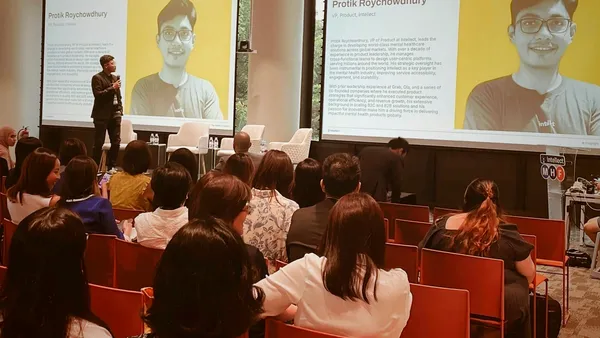
Protik Roychowdhury is VP Product at Intellect, a regulated enterprise SaaS platform in workforce mental health with 4.5M+ covered lives and $20M+ ARR, where he leads a team of 20+ and has shipped GenAI features. Previously at Grab and Ola. Three-time founder, one exit. Based in Singapore.
100-word bio
Protik Roychowdhury is VP Product at Intellect, a regulated enterprise SaaS platform in workforce mental health serving 4.5M+ covered lives across APAC, ANZ, China, and Latam at $20M+ ARR. He leads a team of 20+ across product, design, content, localisation, and AI, and led the product side of the pivot from consumer app to B2B2C. Before Intellect he was Principal PM at Grab, leading Growth, Engagement & Loyalty for the consumer experience, and the first product manager for Rentals at Ola. He is a three-time founder; Croak.it! was acquired by Exotel in 2015. Author of three papers on AI safety and LLM evaluation. Based in Singapore.
Emcee introduction
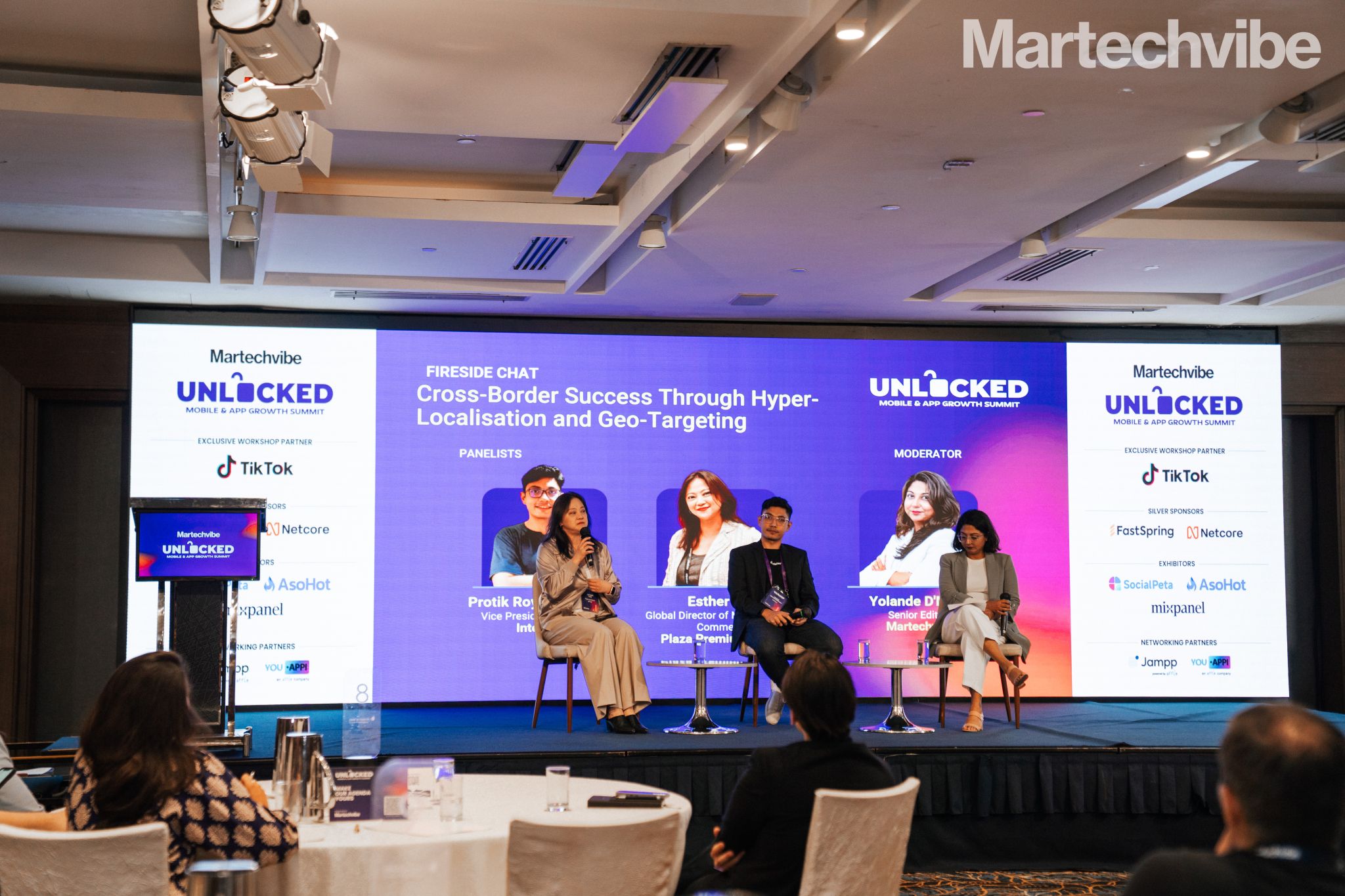
Please welcome Protik Roychowdhury, VP Product at Intellect, a regulated enterprise SaaS platform in workforce mental health with 4.5M+ covered lives. With 15+ years building products at Grab, Ola, and three startups of his own, Protik speaks and writes about what it takes to build products people can trust in the AI era.

- Current role
- VP Product, Intellect
- Location
- Singapore (SGT, UTC+8)
- Topics
- AI Product Strategy, Trust & High-Stakes Design, Product Leadership, Regulated & High-Compliance Tech, Marketplace & Platforms
- Formats
- Keynotes, panels, fireside chats, workshops, podcasts
- Languages
- English, Hindi, Bengali
Availability
Based in Singapore. Available globally for in-person and virtual events. Travels regularly across APAC, India, and EMEA.
Fee structure
Fees vary by format, audience size, and travel requirements. Pro-bono and reduced-fee slots are available for nonprofits, student events, and mental health initiatives. Contact for a quote.
A/V & setup
Standard keynote setup: presentation clicker, lavalier or headset mic, HDMI/USB-C connection to projector. Slide decks delivered 48 hours in advance.